
Ensuring proper coating thickness is crucial across industries such as automotive, manufacturing, aerospace, electronics, construction, and metal finishing. Whether it’s paint, electroplating, powder coating, galvanizing, ceramic coating, or anodizing, the thickness of the applied layer determines durability, corrosion resistance, surface appearance, and long-term performance.
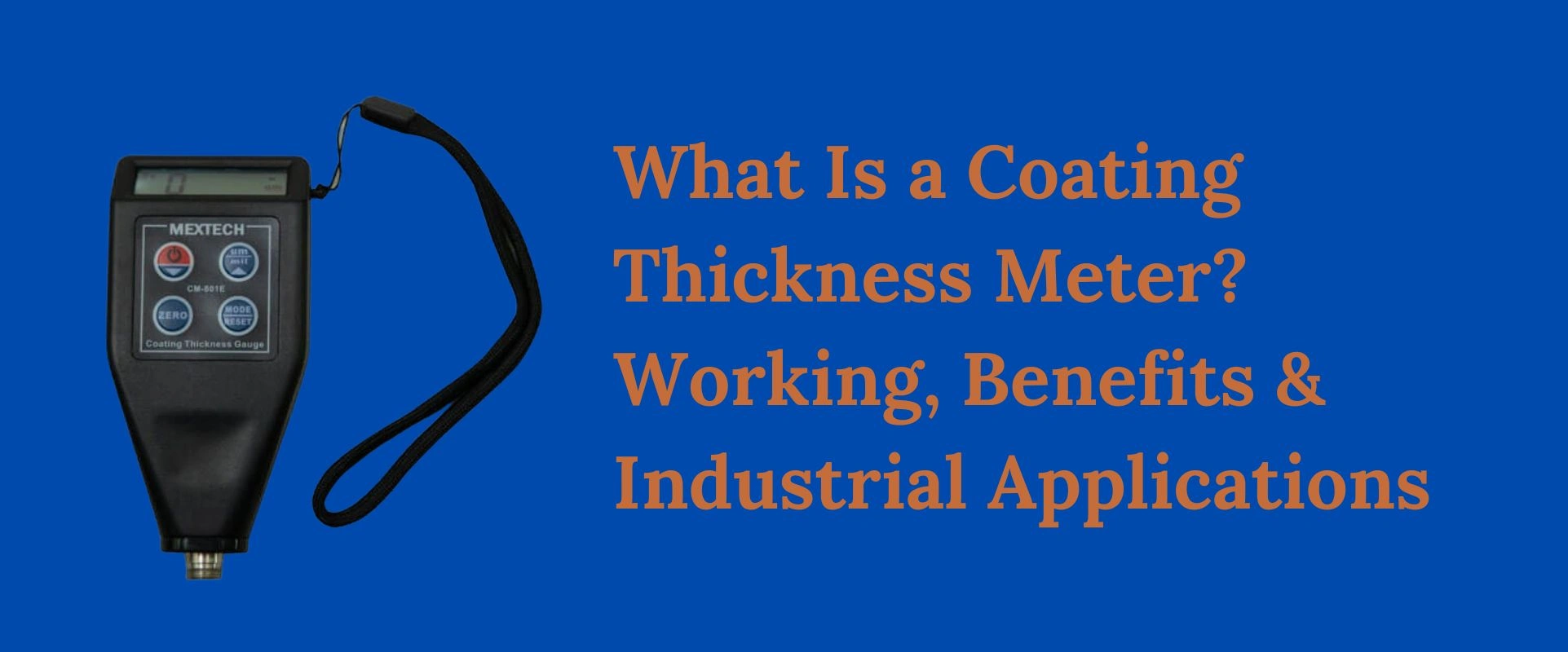
To achieve precise and consistent coating measurements, industries rely on a coating thickness meter — a modern, portable instrument designed to measure coating thickness on various substrates such as steel, aluminum, plastics, and non-metal surfaces. For professionals who demand accuracy and reliability, Mextech offers high-quality coating thickness meters trusted across India.
In this comprehensive guide, we explain what a coating thickness meter is, how it works, types of coatings measured, its benefits, and key industrial applications.
What Is a Coating Thickness Meter?
A Coating Thickness Meter (also known as a Digital Thickness Gauge or Paint Thickness Meter) is an electronic instrument used to measure the thickness of surface coatings without cutting, damaging, or affecting the material.
It measures coatings such as:
- Powder coating
- Paint
- Electroplating
- Galvanizing
- Chrome plating
- Zinc coating
- Ceramic coating
- Anodizing
- Varnish
- Enamel
Coating thickness measurement ensures product quality, durability, corrosion protection, and compliance with international standards.
Why Is Coating Thickness Important?
Coating thickness affects:
- Corrosion resistance of metals
- Product lifespan
- Aesthetic finish
- Electrical insulation
- Heat resistance
- Mechanical protection
- Quality control in manufacturing
Too thin a coating may cause corrosion or wear, whereas too thick a coating may peel, crack, or increase production cost. This makes accurate measurement essential.
How Does a Coating Thickness Meter Work?
A coating thickness meter works using non-destructive testing (NDT) principles. Depending on the material and coating type, meters operate on:
1. Magnetic Induction Principle (For Ferrous Metals)
Used to measure non-magnetic coatings on magnetic metals such as steel or iron.
Examples:
- Paint on steel
- Powder coating on iron
- Epoxy on steel
The device calculates coating thickness by detecting changes in magnetic flux density.
2. Eddy Current Principle (For Non-Ferrous Metals)
Used to measure non-conductive coatings on non-magnetic metals such as aluminum, copper, or brass.
Examples:
- Anodizing on aluminum
- Paint on copper
- Ceramic coating on aluminum
An alternating current induces eddy currents on the metal surface to determine coating thickness.
3. Ultrasonic Measurement (For Non-Metal Surfaces)
Used for multilayer coatings or coatings on plastics, composites, or wood.
Examples:
- Plastic coatings
- Fiberglass components
- Non-metallic materials
Ultrasonic waves reflect at the coating-substrate boundary and provide precise measurement.
Types of Coating Thickness Meters
1. Magnetic Coating Thickness Meters
Used only on ferrous substrates like iron and steel.
2. Eddy Current Thickness Meters
Used on non-ferrous metals.
3. Dual-Mode Coating Thickness Meters (Ferrous & Non-Ferrous)
The most versatile — ideal for industrial use.
4. Ultrasonic Thickness Meters
Used for multilayer or non-metal coatings.
Benefits of Using a Coating Thickness Meter
Using a coating thickness meter offers numerous benefits across industries:
1. Ensures Quality Control
Helps maintain consistent coating thickness as per industry standards.
2. Prevents Corrosion & Increases Durability
Ensures protective coatings are adequately applied.
3. Reduces Production Costs
Prevents overcoating and reduces material wastage.
4. Improves Product Performance
Correct coating thickness improves strength, finish, and resistance.
5. Non-Destructive Evaluation (NDT)
Testing is performed without scratching, cutting, or damaging the surface.
6. Fast & Accurate Measurements
Instant readings increase inspection productivity and efficiency.
7. Compliance With International Standards
Helps meet ISO, ASTM, SSPC, and NACE coating measurement standards.
Industrial Applications of Coating Thickness Meters
Coating thickness meters are widely used across industries:
1. Automotive Industry
Used for measuring paint, enamel, and coating thickness on car bodies, panels, and refinished parts.
2. Manufacturing & Production
Ensures correct coating thickness during industrial assembly lines.
3. Aerospace Industry
Used for coatings on aircraft components requiring high precision.
4. Metal Fabrication
Measures galvanizing, zinc plating, powder coating, and hot-dip coatings.
5. Marine & Offshore
Essential for corrosion protection on ships, offshore platforms, and pipelines.
6. Oil & Gas Sector
Used to inspect protective coatings on drilling equipment and storage tanks.
7. Construction & Infrastructure
Measures coatings on steel bridges, buildings, and structural components.
8. Electronics & Electrical Industry
Helps measure thin coatings on circuit boards and semiconductor components.
9. Quality Inspection & Certification
Used by inspection agencies for audits and compliance testing.
Why Choose Mextech Coating Thickness Meters?
Mextech offers highly accurate, durable, and industry-tested coating thickness meters trusted across India. Key advantages include:
- Wide measurement range
- High accuracy
- Dual-mode ferrous and non-ferrous capability
- User-friendly interface
- Durable build for industrial environments
- Competitive pricing
- Reliable after-sales support
Whether you’re in manufacturing, automotive, R&D, or quality control, Mextech provides reliable instruments for precise coating measurement.
FAQs About Coating Thickness Meters
1. What is a coating thickness meter used for?
It measures the thickness of paint, plating, powder coating, and other surface coatings on metal or non-metal substrates.
2. Can it measure coatings on aluminum?
Yes, using the eddy current principle.
3. Is coating thickness testing non-destructive?
Yes. Modern thickness meters do not damage or scratch the surface.
4. What industries use coating thickness meters?
Automotive, aerospace, manufacturing, metal fabrication, marine, oil & gas, and construction.
5. What is the standard coating thickness?
It depends on the industry:
- Automotive paint: 80–180 μm
- Powder coating: 60–120 μm
- Galvanizing: 50–90 μm
6. Does Mextech offer ferrous & non-ferrous meters?
Yes. Mextech provides dual-mode coating thickness meters suitable for both substrates.
7. How accurate are Mextech coating thickness meters?
Accuracy varies by model but typically ranges from ±(1–3% + 1 digit).
8. Do I need calibration?
Yes. Calibration ensures high accuracy and is recommended periodically.
Conclusion
A coating thickness meter is essential for quality control, durability, corrosion protection, and cost optimization across industries. With precise measurement and user-friendly operation, Mextech coating thickness meters help industries maintain high-quality standards and improve operational efficiency.