
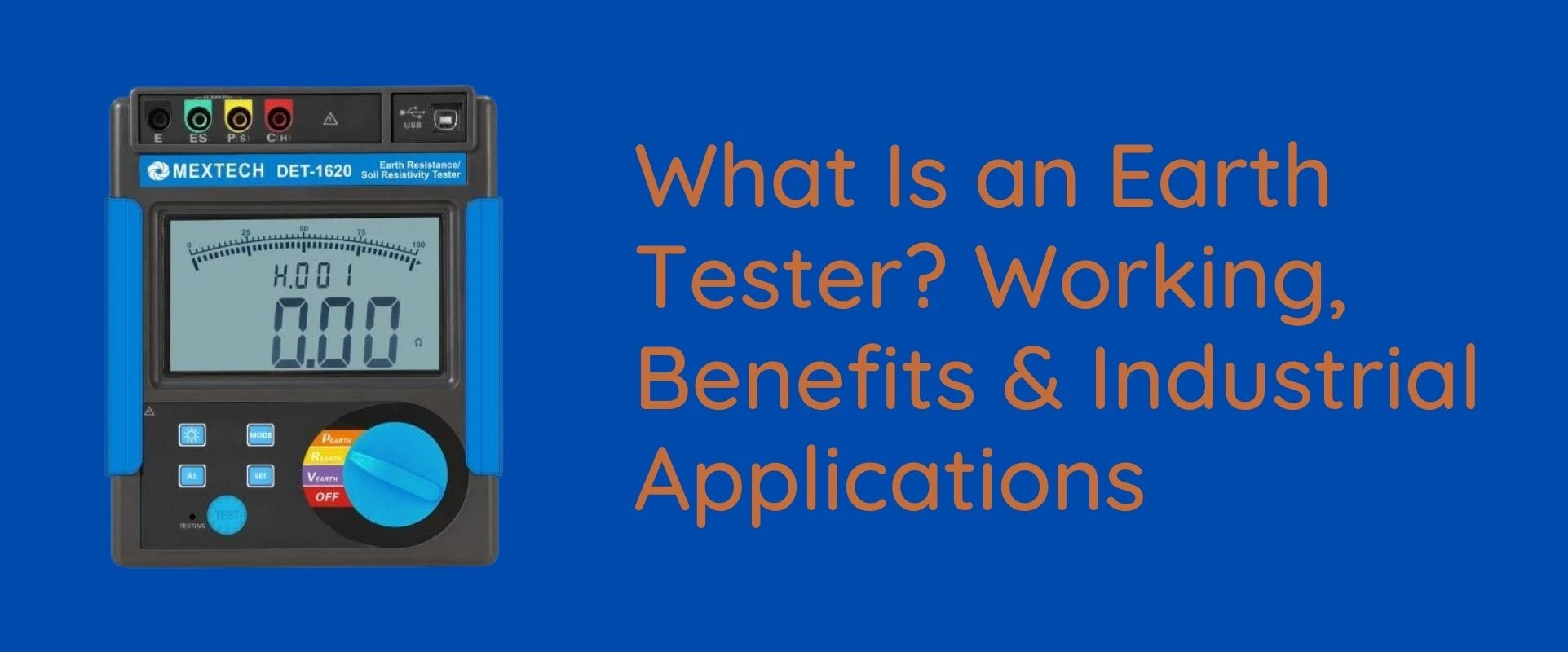
Electrical safety is one of the most crucial parts of any industrial, commercial, or residential electrical system. Proper earthing (grounding) protects lives, equipment, and infrastructure from electrical faults, leaks, overloads, and short circuits. To ensure the earthing system is functioning correctly, electricians and engineers rely on a special instrument known as an Earth Tester.
An Earth Tester is an essential electrical testing tool that measures the earth resistance of grounding systems. Whether you’re working on a substation, industrial plant, building wiring, or solar power system, checking earth resistance regularly ensures a safe and stable electrical environment.
In this detailed guide, we will discuss what an Earth Tester is, how it works, its major benefits, different types, and industrial applications. This blog is specifically created for Mextech customers and professionals who use Earth Testers for reliable electrical testing.
What Is an Earth Tester?
An Earth Tester, also called an Earth Resistance Tester or Ground Resistance Tester, is an electrical measuring instrument used to determine the resistance of an earthing system.
The earthing system safely directs excess electrical current into the ground. If the resistance is too high, the fault current cannot dissipate properly and may cause:
- Electric shocks
- Equipment damage
- Fire hazards
- Voltage instability
- Electromagnetic interference
An Earth Tester ensures that grounding electrodes, rods, and mesh systems maintain low resistance levels according to standards like IS 3043, IEEE 80, and IEC guidelines.
What Does It Measure?
A typical Earth Tester measures:
- Earth Resistance (Ω)
- Earth Voltage (V)
- Ground loop resistance
- Continuity (in some models)
These values help determine whether the earthing installation is safe and effective.
How Does an Earth Tester Work?
Earth Testers use special test leads and auxiliary electrodes to measure earth resistance using different methods. Though modern testers are digital, the working principle remains similar to classical analog Earth Testers.
Here’s how it works:
1. Test Current Injection
The Earth Tester injects a small, controlled AC current into the ground through two auxiliary electrodes placed in the soil.
2. Voltage Drop Measurement
A second pair of electrodes measures the voltage drop created due to the injected current.
3. Resistance Calculation
Using Ohm’s Law (R = V / I), the Earth Tester automatically calculates:
Earth Resistance = Voltage Drop / Test Current
The result is displayed on the screen in ohms (Ω).
4. Soil Condition Compensation
Some advanced models compensate for:
- Soil moisture
- Temperature
- Soil resistivity
- Interference from nearby electrical systems
This ensures highly accurate readings.
Testing Methods Used by Earth Testers
Earth Testers commonly use several testing techniques depending on the requirement:
1. Fall-of-Potential (3-Point Test)
The most widely used method where:
- One electrode injects current
- Second electrode measures voltage
- Earth resistance is calculated based on distance
2. 4-Point Method (Wenner Method)
Used for large earth grids and soil resistivity testing.
Four electrodes are inserted in a straight line to measure soil resistivity.
3. Clamp-On Method
Ideal for live systems without disconnecting the grounding.
Used for:
- Buildings
- Towers
- Industrial electrical panels
4. Stakeless Testing
A combination of clamp meters to measure grounding loop resistance without driving electrodes.
Each method has unique use cases, making Earth Testers highly versatile.
Why Is Earth Resistance Testing Important?
Just installing an earthing system is not enough. Periodic testing is essential to ensure continued safety and performance.
Proper earth testing helps detect:
- Corrosion of grounding rods
- Loose earth connections
- Soil condition changes
- Broken or damaged grounding conductors
- Ineffective earthing pits
- Unauthorized electrical modifications
Industries and buildings must comply with safety standards that mandate periodic earth resistance testing to prevent electrical accidents.
Key Benefits of Using an Earth Tester
Earth Testers offer several advantages for electrical installations:
1. Ensures Electrical Safety
Accurate earth resistance ensures fault currents flow safely into the ground, reducing electrical shock hazards.
2. Prevents Equipment Damage
Sensitive electrical equipment can get damaged without a proper grounding system. Earth Testers help protect:
- Motors
- Control panels
- UPS systems
- Solar inverters
- Data centers
3. Enhances System Reliability
Lower earth resistance ensures stable voltage and reduces risks of:
- Voltage fluctuation
- Lightning surge damage
- Power quality issues
4. Detects Faults Early
Regular earthing checks help identify:
- Loose connections
- Corroded rods
- Damaged conductors
before they cause system failure.
5. Avoids Power Failures
Excessive earth resistance causes instability in electrical networks. Testing ensures uninterrupted operation in:
- Industries
- Hospitals
- Commercial buildings
6. Supports Compliance with Standards
Industries must follow earthing standards set by:
- IS 3043
- IEC
- IEEE
Earth Testers help achieve compliance during:
- Electrical audits
- Maintenance inspections
- Commissioning
7. Essential for Lightning Protection Systems
Earth resistance testing ensures that lightning surge systems safely discharge high voltages into the soil.
Types of Earth Testers
Earth Testers come in different forms based on usage and technology:
1. Digital Earth Testers
Easy to use, accurate, and ideal for most electrical applications.
2. Analog Earth Testers
Used for basic or traditional testing requirements.
3. Clamp-On Earth Testers
Measure earth resistance without disconnecting circuits.
4. Soil Resistivity Meters
Used for designing new earthing systems or testing soil properties.
5. Multifunction Testers
Measure:
- Earth resistance
- Continuity
- Insulation
- Voltage
- Loop impedance
Perfect for large installations and industrial engineering teams.
Industrial Applications of Earth Testers
Earth Testers are used across multiple industries to ensure electrical grounding integrity. Here are the top applications:
1. Power Plants & Substations
Used for:
- Transformer grounding
- Lightning arresters
- Transmission tower grounding
- Earthing grids
2. Manufacturing Industries
Factories depend on Earth Testers for machinery grounding, including:
- Motors
- Compressors
- Control panels
- CNC machines
3. Construction & Building Infrastructure
Used during installation and maintenance of building earthing systems.
4. Telecom & Data Centers
Essential for grounding:
- Servers
- Network equipment
- Switching stations
Ground resistance must be extremely low to avoid data loss and downtime.
5. Solar Power Plants
Solar inverters and arrays must be grounded properly to avoid lightning damage.
Earth Testers ensure safety in:
- Rooftop solar
- Ground-mounted farms
- Off-grid systems
6. Oil, Gas & Petrochemical Industries
Critical environments where earthing protects against:
- Static charge buildup
- Explosive hazards
- Spark formation
7. Railway & Metro Systems
Used for:
- Track earthing
- Substation grids
- Signal grounding systems
8. Commercial Buildings & Malls
Earth Testers are used during routine audits and safety inspections.
9. Hospitals & Healthcare Facilities
Ensures safe operation of sensitive equipment like:
- MRI machines
- Ventilators
- X-Ray systems
- ICU electrical panels
How to Choose the Right Earth Tester
When selecting an Earth Tester for industrial or professional use, consider:
- Accuracy range
- Display size
- Measurement method supported
- Durability and build quality
- Safety ratings (CAT standards)
- Data logging features
- Battery backup
Mextech Earth Testers are known for reliability, precision, and long-lasting performance—making them a top choice for technicians and engineers.
Frequently Asked Questions (FAQs)
1. What is the purpose of an Earth Tester?
An Earth Tester measures the resistance of the grounding system to ensure electrical safety and prevent faults.
2. What is an acceptable earth resistance value?
Generally, below 1 ohm is ideal for critical systems, while 1–5 ohms is acceptable for most installations.
3. How often should earth resistance be tested?
At least once a year for normal installations and every 6 months for critical industries.
4. Can we test earth resistance without disconnecting the system?
Yes. Clamp-on Earth Testers allow testing without disconnecting grounding connections.
5. What causes high earth resistance?
Common reasons include:
- Dry soil
- Corroded rods
- Loose connections
- Faulty grounding pits
- Poor installation
6. Are digital Earth Testers accurate?
Yes. Digital Earth Testers provide fast, precise, and interference-free readings.
7. Is an Earth Tester required for solar installations?
Absolutely. Proper earthing is mandatory for solar panels, inverters, and lightning protection.