
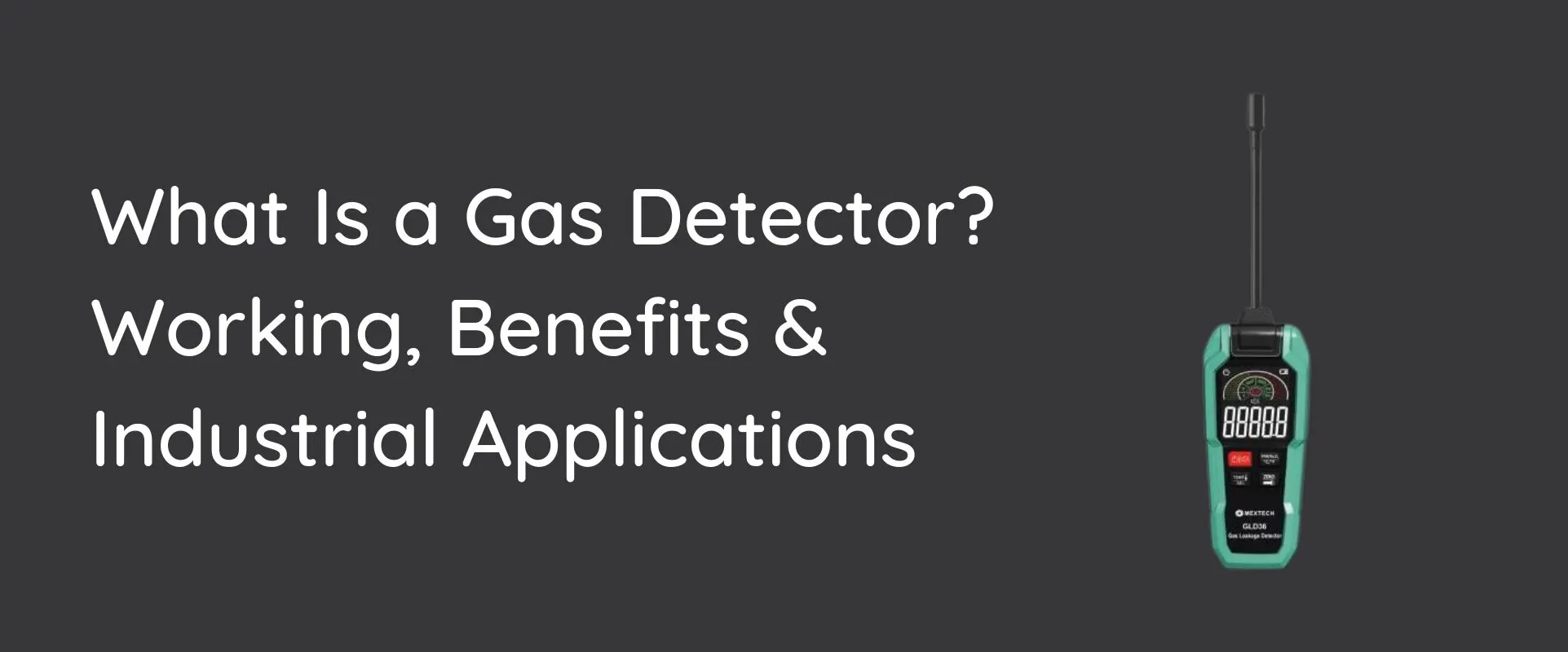
In industries where combustible gases, toxic vapors, or oxygen-deficient environments may exist, maintaining air quality is not just a regulatory requirement—it is a matter of life and safety. Gas leaks can lead to explosions, health hazards, fires, equipment failures, and severe workplace accidents. That’s why Gas Detectors play a critical role in industrial safety systems.
As one of the leading manufacturers of testing and measuring instruments in India, Mextech offers highly reliable, accurate, and easy-to-use gas detectors. This blog explains what gas detectors are, how they work, the various types available, their industrial uses, and why they are essential for safe operations.
What Is a Gas Detector?
A Gas Detector is a device used to identify the presence of hazardous gases in the air. It continuously monitors the environment and gives alerts when gas levels exceed safe limits.
These gases can be:
- Flammable gases (Methane, LPG, Hydrogen)
- Toxic gases (Carbon monoxide, Ammonia, Hydrogen sulfide)
- Oxygen depletion or enrichment
- Volatile organic compounds (VOCs)
- Industrial gases (Chlorine, Nitrogen dioxide, Sulfur dioxide)
Gas detectors are essential safety devices used in industries, laboratories, manufacturing plants, mining operations, and confined spaces.
Why Gas Detection Is Important?
Gas leaks can occur without warning. Many hazardous gases are:
- Colorless
- Odorless
- Tasteless
- Impossible to detect with human senses
This makes gas detectors indispensable.
Hazardous gases can cause:
- Respiratory damage
- Burns or chemical exposure
- Oxygen deficiency
- Explosions and fires
- Equipment corrosion and damage
- Asphyxiation
- Environmental pollution
Thus, installing gas detectors helps create a safe work environment and ensures compliance with industrial safety standards.
How Does a Gas Detector Work?
Gas detectors work by sensing the presence of specific gases and converting this information into measurable data. Based on internal sensors, they trigger alarms when dangerous levels are detected.
Here’s a simplified breakdown:
1. Detection Sensors
The sensor is the heart of every gas detector. Different types of sensors detect different gases:
A. Electrochemical Sensors
Used mainly for detecting toxic gases such as CO, H₂S, NO₂, etc.
They work by creating an electric current when the target gas interacts with an electrode.
B. Catalytic Bead Sensors
Common in detecting flammable gases like methane, propane, and hydrogen.
They work by oxidizing the gas, generating heat which changes resistance in the sensor.
C. Infrared (IR) Sensors
Used for gas detection in combustible and CO₂ applications.
The gas absorbs light at specific wavelengths, indicating its concentration.
D. Semiconductor Sensors
Used for general leak detection and VOC monitoring.
These sensors change resistance when gas molecules react with a semiconductor surface.
E. PID (Photoionization Detector)
Used for detecting volatile organic compounds (VOCs).
Works by ionizing gas molecules using ultraviolet light.
2. Data Processing
Once gas presence is detected, the detector’s microprocessor:
- Converts sensor output into readable ppm (parts per million) or %LEL (Lower Explosive Limit)
- Analyzes concentration trends
- Activates warning systems if thresholds are exceeded
3. Alarm System
Gas detectors alert users through:
- Loud audio alarms
- Flashing visual lights
- Vibration alerts
- Digital display readings
This ensures workers can evacuate or take action immediately.
Types of Gas Detectors
Gas detectors come in multiple types depending on usage and application.
1. Portable Gas Detectors
Small, battery-powered devices used by workers for personal safety.
Ideal for:
- Confined space entry
- Field maintenance
- On-site inspections
2. Fixed Gas Detectors
Installed permanently in hazardous work areas.
They continuously monitor for leaks and trigger alarms connected to central control systems.
Used in:
- Factories
- Industrial plants
- Chemical processing units
- Boiler rooms
3. Single-Gas Detectors
Designed to detect a specific gas such as CO, H₂S, or O₂.
4. Multi-Gas Detectors
Monitor multiple gases simultaneously, often:
- Oxygen (O₂)
- Combustible gases (%LEL)
- CO
- H₂S
Widely used in industrial safety.
5. Wireless / Smart Gas Detectors
Modern detectors can send data to smartphones or monitoring systems.
Key Benefits of Gas Detectors
Gas detectors provide several advantages that make them essential for safety and compliance.
1. Early Detection of Hazardous Gases
They identify gas leaks before they reach dangerous concentrations, enabling rapid action.
2. Prevent Explosions and Fires
Many gases are highly flammable. Detecting them early reduces explosion risks.
3. Protect Worker Health
Prevent exposure to toxic gases that can harm respiratory systems or cause long-term illness.
4. Ensures Regulatory Compliance
Industries must follow safety standards such as:
- OSHA
- IS/ISO safety guidelines
- Local industrial safety rules
Gas detectors help meet these requirements.
5. Prevent Equipment Damage
Hazardous gases can corrode machinery and electrical systems.
6. Protects the Environment
Gas leaks can cause chemical pollution and atmospheric damage.
7. Supports Safe Maintenance Work
Workers can safely operate in confined spaces like:
- Boilers
- Tanks
- Tunnels
- Sewage systems
8. Provides Real-Time Gas Monitoring
Modern digital gas detectors show live gas concentration levels.
Industrial Applications of Gas Detectors
Gas detectors are widely used in industries where gas hazards are common.
1. Oil & Gas Industry
Used to detect:
- Methane
- Hydrocarbon vapors
- Hydrogen sulfide
Protects against fires and toxic exposure.
2. Chemical & Petrochemical Plants
Used to monitor:
- Chlorine
- Ammonia
- VOCs
- Flammable gases
3. Manufacturing & Industrial Plants
Gas detectors ensure safety around:
- Boilers
- Furnaces
- Compressors
- Storage tanks
4. Food & Beverage Industry
Used to detect:
- CO₂ in breweries
- Refrigerant gases
- Oxygen levels in storage rooms
5. Pharmaceuticals
Critical for labs handling chemicals, solvents, and biological gases.
6. Mining Industry
Used to detect methane pockets and oxygen depletion underground.
7. HVAC & Refrigeration
Used to detect refrigerant leaks.
8. Residential & Commercial Buildings
Used in kitchens, basements, and indoor air monitoring.
9. Environmental Monitoring
Detect gases responsible for:
- Air pollution
- Greenhouse effects
Features to Look for in a High-Quality Gas Detector
When choosing a gas detector, consider:
- High accuracy and sensitivity
- Fast response time
- Multi-gas support
- Digital display
- Long-lasting sensors
- Audible & visual alarms
- Robust design
- Battery backup
- Calibration capability
- Real-time data logging
- Low maintenance
Mextech gas detectors are designed to meet these demands using advanced sensor technology and user-friendly interfaces.
Why Choose Mextech Gas Detectors?
Mextech gas detectors are trusted by industries across India for:
- Accurate detection of multiple gases
- Durable, industrial-grade construction
- Lightweight portable designs
- Reliable performance in harsh environments
- Competitive pricing
- Strong after-sales support
- Designed for both industrial and commercial applications
Whether it’s a factory, laboratory, construction site, or commercial building, Mextech offers gas detection solutions that help protect people, property, and the environment.
FAQs About Gas Detectors
1. What does a gas detector measure?
It measures the concentration of hazardous gases such as CO, methane, ammonia, LPG, and oxygen levels.
2. How often should a gas detector be calibrated?
Most detectors need calibration every 6–12 months, depending on usage and environment.
3. Can a single gas detector detect all gases?
No. Single-gas detectors only detect one gas. For multiple gases, a multi-gas detector is required.
4. Do gas detectors need regular maintenance?
Yes. Regular sensor checks, battery replacement, and calibration ensure accurate performance.
5. Where should gas detectors be installed?
Installation height depends on gas density.
Example:
- LPG detectors are placed near the floor
- Methane detectors are installed near the ceiling
6. Are Mextech gas detectors suitable for industrial use?
Yes. Mextech detectors are designed for demanding industrial environments and offer high accuracy.
7. Can gas detectors prevent explosions?
They help detect gas leaks early, allowing preventive action before explosive levels are reached.