
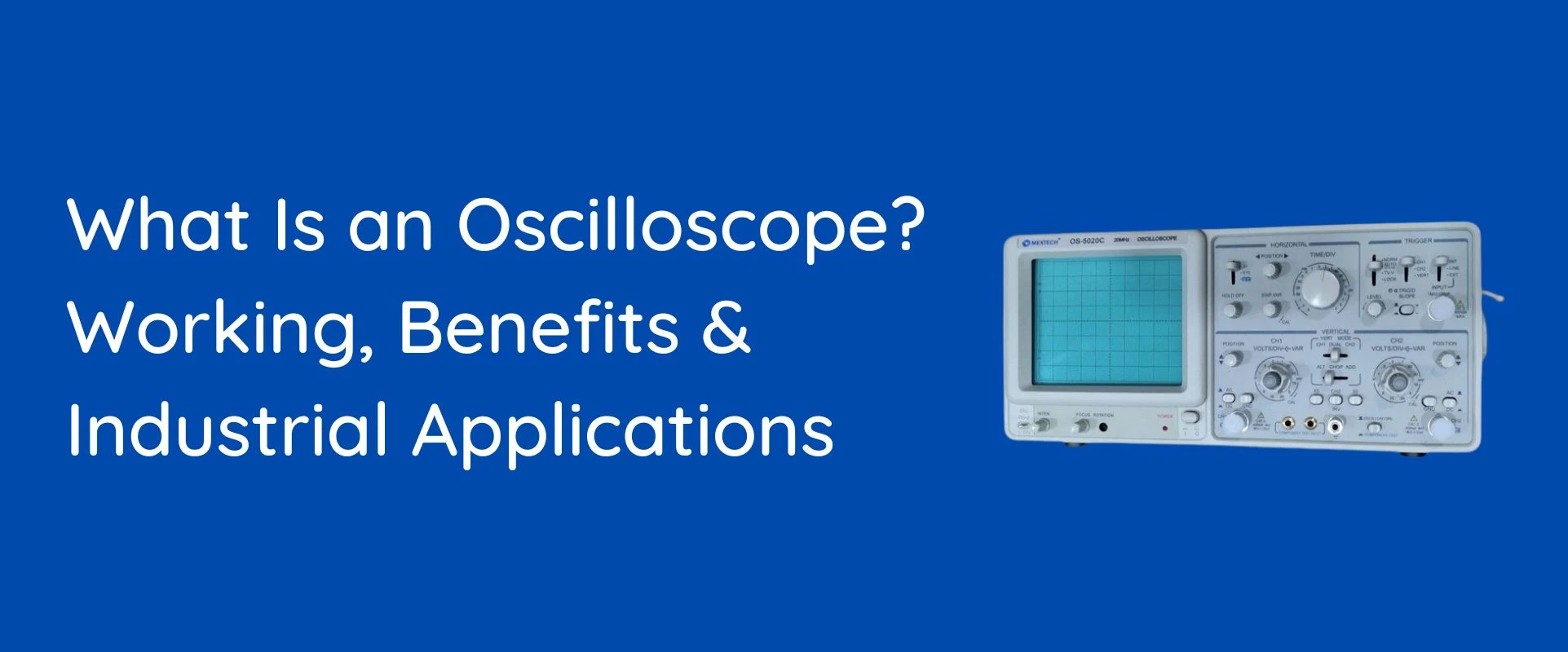
In the world of electronics, testing and measurement equipment plays a critical role in ensuring accuracy, quality, and system reliability. Among these instruments, the oscilloscope is one of the most powerful tools for analyzing signals, diagnosing faults, and validating circuit performance.
Whether you work in electronics design, industrial automation, automotive testing, telecommunications, or research, an oscilloscope is indispensable for visualizing electrical signals in real time. In this detailed guide, Mextech explains what an oscilloscope is, how it works, its key features, benefits, and the industries that rely on it daily.
What Is an Oscilloscope?
An oscilloscope is a testing instrument used to display and analyze the waveform of electronic signals. It provides a visual representation of voltage over time, allowing engineers and technicians to quickly understand the behavior of an electrical system.
Oscilloscopes measure key parameters such as:
- Voltage (Amplitude)
- Frequency
- Time interval
- Rise and fall time
- Phase difference
- Noise and distortion
- Signal stability
- Irregularities or spikes
This makes oscilloscopes essential for troubleshooting circuits, measuring dynamic signals, and validating electrical performance.
How Does an Oscilloscope Work?
An oscilloscope works by capturing an electrical signal, processing it through internal circuits, and displaying it on a screen as a waveform.
1. Signal Input
The signal is fed to the oscilloscope through probes connected to the device under test.
2. Vertical System (Amplitude Control)
The vertical amplifier processes the voltage level of the signal and adjusts the scale.
3. Horizontal System (Time Base Control)
The time base system sets the time scale for waveform display (milliseconds, microseconds, nanoseconds).
4. Trigger System
The trigger system stabilizes the waveform so it does not drift across the screen.
It sets a reference point where measurement begins.
5. Display Section
The processed waveform is shown on the oscilloscope screen as voltage vs. time.
Digital oscilloscopes further convert the analog signal into digital form using:
- Analog-to-Digital Converter (ADC)
- Sampling circuits
- Digital memory
- Signal processing algorithms
This ensures high accuracy, data storage, and advanced analysis.
Types of Oscilloscopes
Oscilloscopes manufacturers come in different types depending on signal type, application, and features.
1. Analog Oscilloscope
- Displays continuous electrical waveforms
- No digital processing delay
- Ideal for simple waveform observation
2. Digital Storage Oscilloscope (DSO)
- Most popular modern type
- Converts analog signals into digital data
- Offers advanced features: memory storage, auto-analysis, FFT, screenshots
3. Digital Phosphor Oscilloscope (DPO)
- Enhanced waveform detail
- Fast signal capture
- Suitable for repetitive signals and transient analysis
4. Mixed Signal Oscilloscope (MSO)
- Combines analog and digital channels
- Used for embedded system testing
5. Portable Oscilloscope
- Handheld
- Perfect for field testing
Key Features of a Modern Oscilloscope
When choosing a high-quality oscilloscope like those from Mextech, pay attention to:
✓ Bandwidth
Determines the range of frequencies the oscilloscope can measure.
✓ Sampling Rate
Affects accuracy of waveform reconstruction.
✓ Channels
More channels allow simultaneous multi-signal measurement.
✓ Memory Depth
Stores complex waveforms for extended analysis.
✓ Trigger Options
Advanced triggers help capture difficult signals.
✓ Display Quality
High-resolution screens provide better waveform visibility.
✓ Connectivity
USB, LAN, and PC interface for data transfer and remote control.
Benefits of Using an Oscilloscope
Oscilloscopes provide a wide range of benefits to technicians and engineers.
1. Real-Time Signal Visualization
See electrical signals instantly, making analysis easier and faster.
2. Detecting Faults and Irregularities
Identify issues such as noise, spikes, distortion, interference, or unstable waveforms.
3. Ensures Circuit Reliability
Useful in prototype testing, component evaluation, and quality assurance.
4. Saves Time in Troubleshooting
Pinpoint exact circuit issues without guesswork.
5. Multi-Industry Application
Oscilloscopes support various fields—electronics, automotive, telecom, and more.
6. Provides Accurate Measurements
Waveform parameters help validate design calculations and performance expectations.
7. Essential for Predictive Maintenance
Helps identify deterioration or abnormal system behaviors before failures occur.
Industrial Applications of Oscilloscopes
Oscilloscopes are used across numerous industries because every electronic system relies on signal behavior.
1. Electronics R&D
- Analyzing circuits
- Testing components
- Designing PCBs
- Debugging prototypes
2. Manufacturing & Quality Control
- Ensuring electronic product standards
- Detecting defective components
- Analyzing performance during production
3. Automotive Industry
- ECU testing
- Sensor waveform analysis
- Automotive electronics diagnostics
- CAN/LIN bus signal verification
4. Telecommunications
- RF signal analysis
- Modulation testing
- Data transmission validation
5. Industrial Automation
- PLC testing
- Motor drive analysis
- Control panel troubleshooting
6. Power Electronics
- Inverter and converter testing
- Switch-mode power supply analysis
- High-frequency signal measurement
7. Education & Training
- Engineering labs
- Training institutes
- Robotics and embedded learning
8. Aerospace & Defense
- Radar and avionics testing
- High-speed digital signal analysis
Mextech oscilloscopes are built for precision, durability, and advanced industrial performance.
Why Choose Mextech Oscilloscopes?
Mextech provides high-quality testing and measuring instruments trusted across India.
- High Accuracy and Advanced Technology
- Durable, Reliable & Portable Designs
- Suitable for Research, Industrial & Field Use
- Affordable Pricing with Long Life
- Excellent After-Sales Support
- Wide Range of Testing Instruments
Whether you’re a beginner or an experienced engineer, Mextech oscilloscopes offer industry-leading performance.
FAQs: Oscilloscope Explained
1. What is an oscilloscope used for?
An oscilloscope is used to measure, analyze, and display electronic signals to troubleshoot circuits and validate system performance.
2. What industries use oscilloscopes?
Electronics, automotive, telecom, aerospace, manufacturing, and research industries use oscilloscopes regularly.
3. What is the difference between analog and digital oscilloscopes?
Analog oscilloscopes show continuous waveforms, while digital oscilloscopes convert signals into digital data for advanced analysis.
4. What is bandwidth in an oscilloscope?
Bandwidth determines the highest signal frequency the oscilloscope can measure accurately.
5. Can beginners use an oscilloscope?
Yes, modern digital oscilloscopes like those from Mextech are user-friendly and ideal for learning.
6. Why is a trigger system important?
A trigger stabilizes the waveform, ensuring accurate and steady display without drifting.
7. How many channels do I need?
Two channels are sufficient for most users; four or more channels are essential for advanced, multi-signal analysis.